 LIBERTY EPOXYPHILADELPHIA
Self-leveling underlayment, flatwork from a family that started in concrete.
Concrete that waves, dips, or has been patched a dozen times shows through any coating you put over it. Epoxy self-levels only thinly, so it follows the slab it lands on. A self-leveling underlayment is a thick pour that fills all of that and cures flat, on its own where the slab demands it, or as the step before our own epoxy so the finished floor comes out near perfect.
The flat comes from underneath.
Any floor follows the slab under it. Put a coating over waves, low spots and old patch lines and you get a shiny floor with waves, low spots and old patch lines still in it. The underlayment goes down first, thick enough to fill the low ground and cure flat, and our epoxy goes over the top of that.
- A thick self-leveling pour, deep enough to bury waves, low spots and old patch lines
- It finds its own level as it flows, so the flat comes out of the pour itself
- Diamond grinding first, so the pour bonds to the slab instead of sitting on dust
- Cracks and joints cut out and repaired before anything gets poured
- It goes down on its own where the slab is the whole problem
- Or it goes down first and our epoxy goes over it, when the finished floor has to look near perfect
- We pour it under our own finishes only, so one crew owns the whole floor
- Installed nights, weekends, and in phases, so the building keeps running
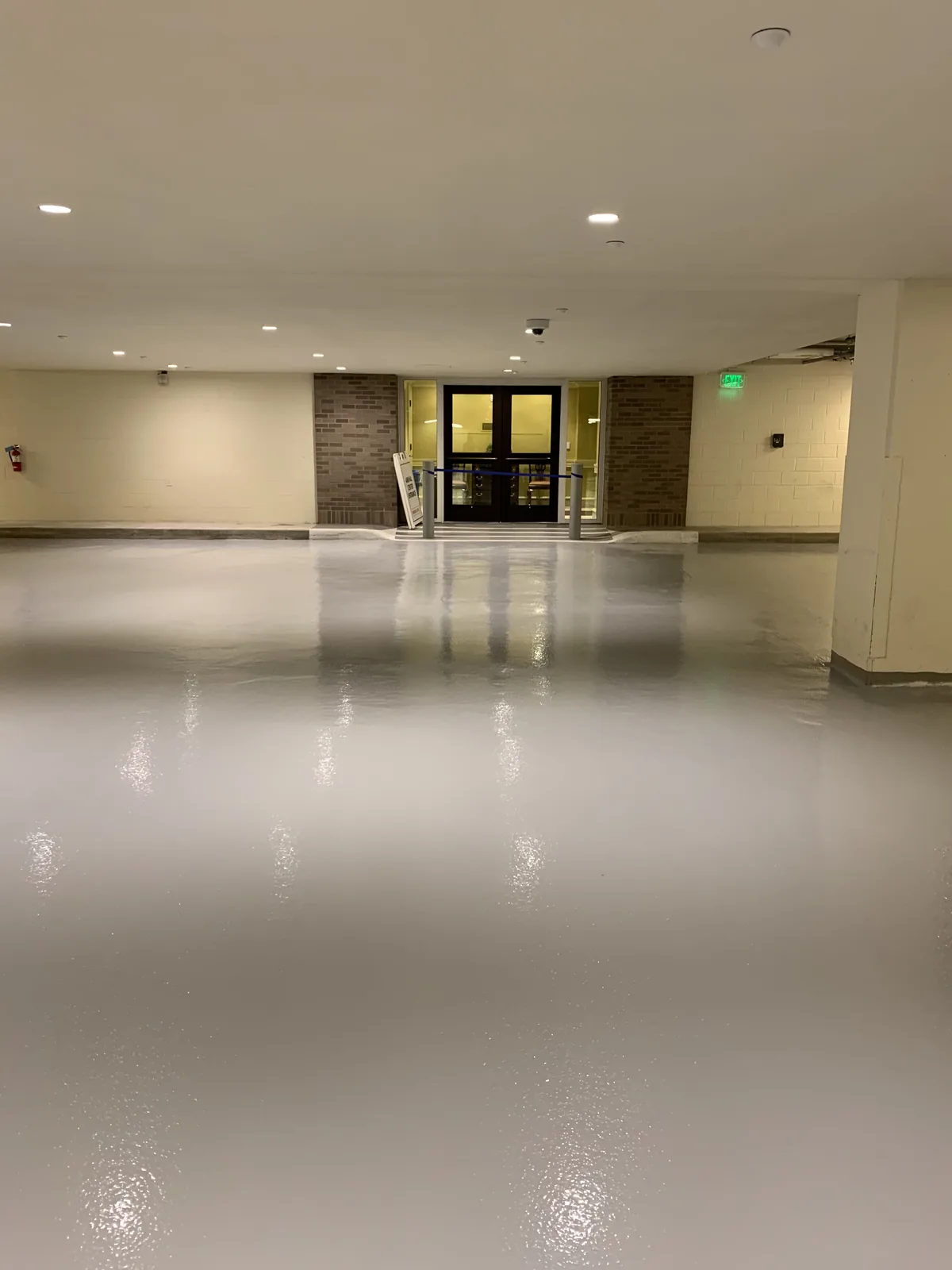
On its own, or under our epoxy.
Sometimes the slab is the whole job. Where concrete has moved, been cut open and patched, or never got finished right in the first place, the pour goes down on its own and levels the room out.
The other way is as the step before the floor you actually asked for. We pour the underlayment, let it cure flat, then run our own solid color epoxy over it. That is how you end up with a finished floor and no waves in the light, and it is why a room that looked hopeless on the walkthrough can come out near perfect.
One boundary worth saying out loud. We pour underlayment under our own finishes. If you need a slab levelled so another trade can lay tile, terrazzo or LVT over it, that is not work we take, and you will hear that on the phone rather than at the estimate.
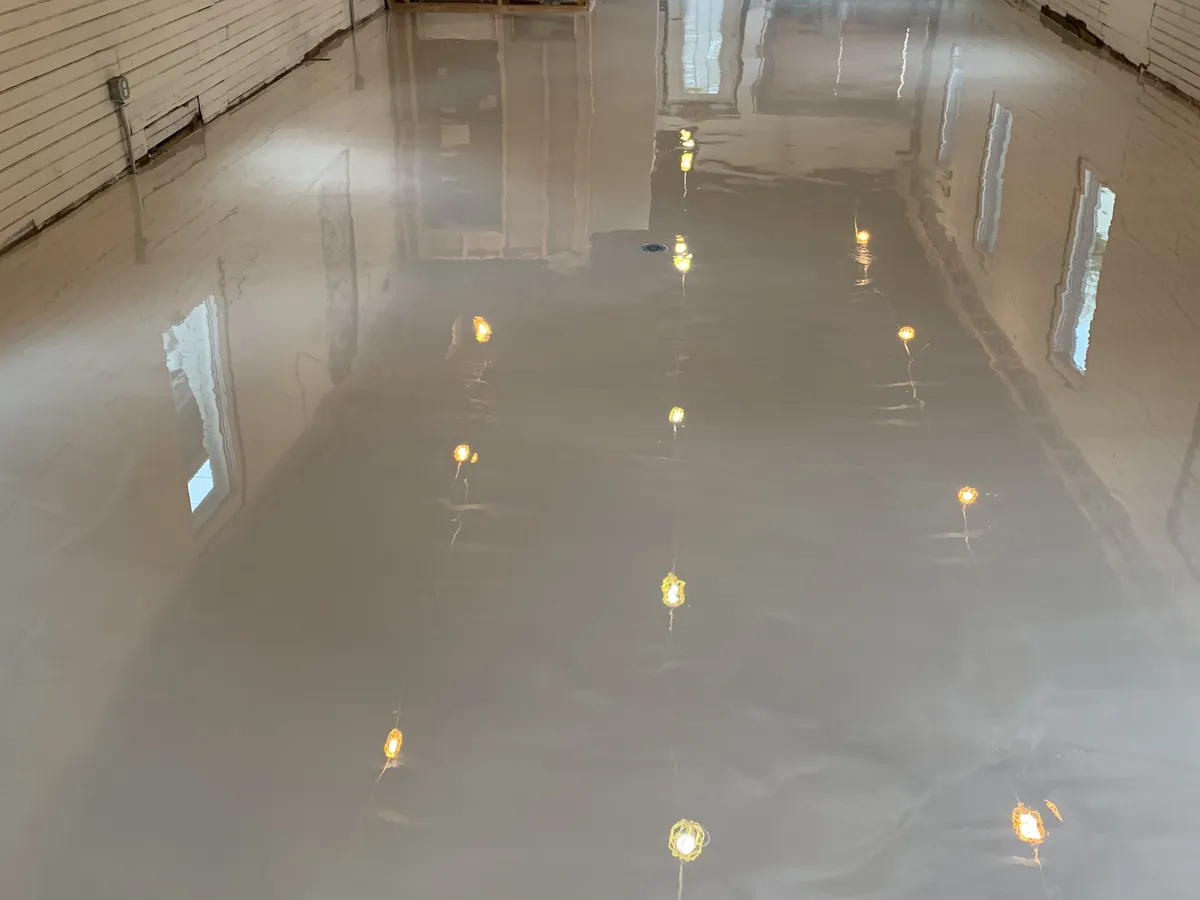
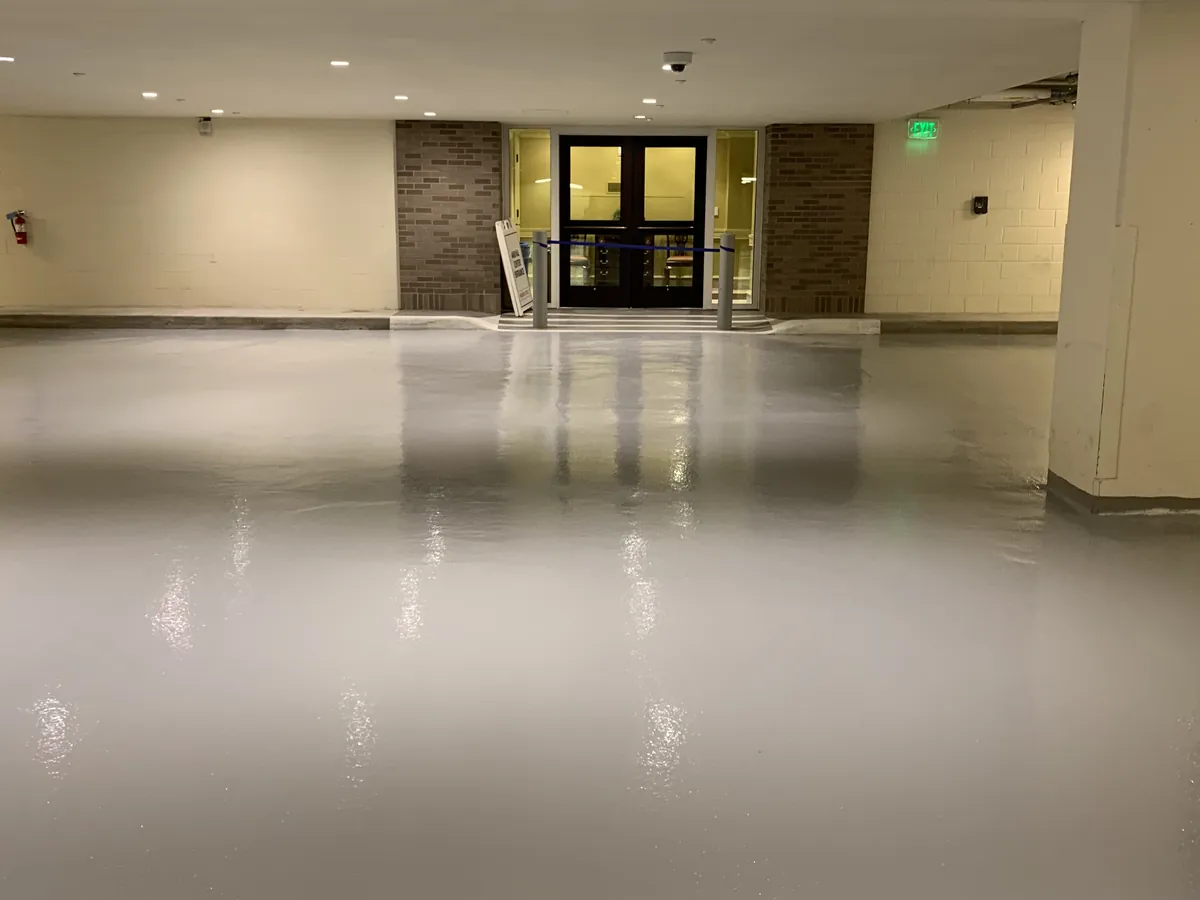
Floors that landed flat.

Self-leveling underlayment, in plain terms.
Why not just pour the epoxy thicker?
Does every floor need it?
Can you level our slab so we can put tile or LVT down?
Do we have to shut the building down?
Tell us what the slab looks like.
Walkthrough, spec, and written estimate at no charge.
Request a Free Project Estimate Call (267) 225-39895.0 on Google, every review five stars · Licensed PA HIC #128520 · Est. 1964